
Cheatsheet to decoding your periods & your nutrition (+ FREE period tracker!)
From spotting, to cervical mucus, to pain & more!
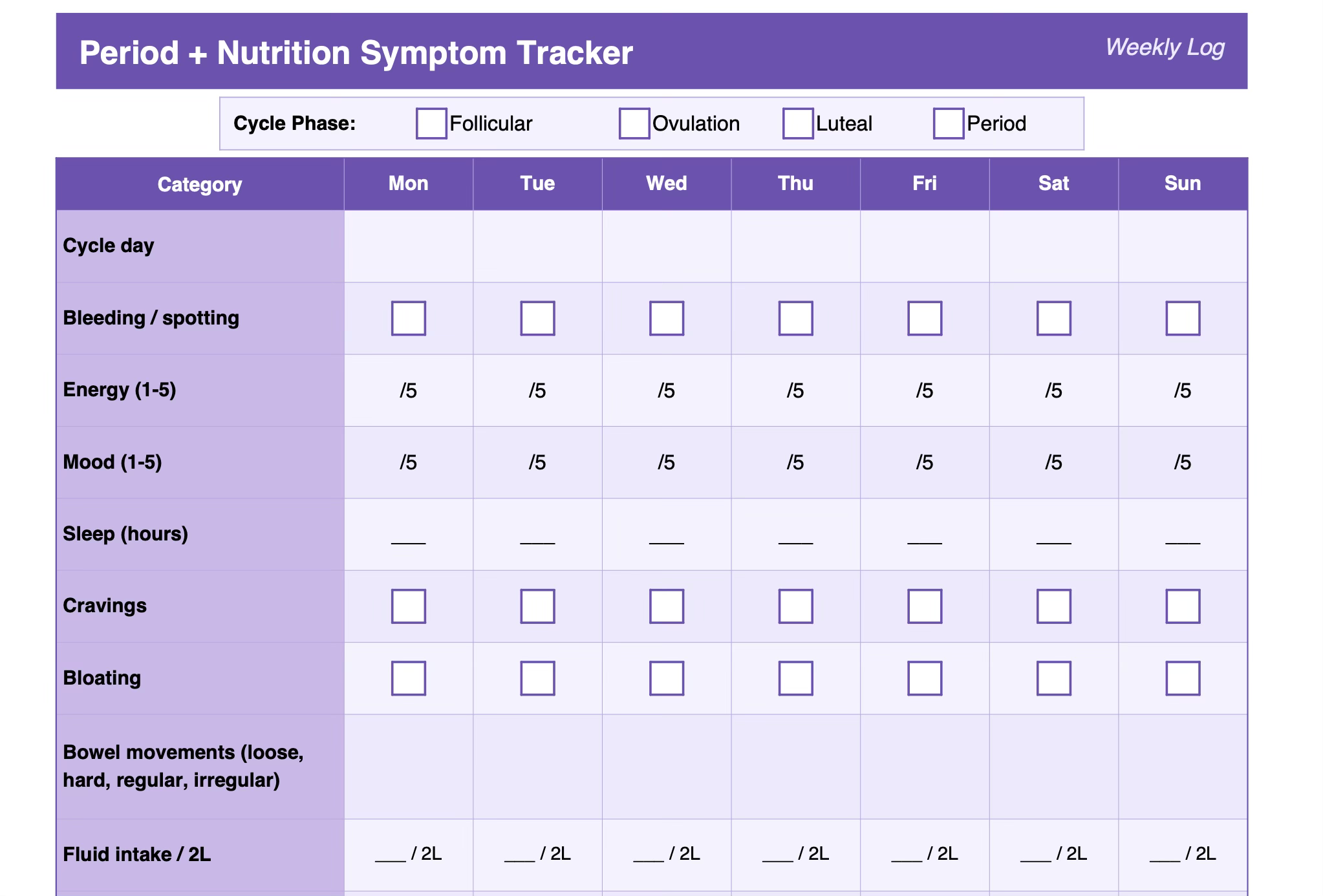
This is a long one…but so important, because our menstrual cycle is one of the most useful health markers we have.
Your energy, cravings, discharge, pain, bleeding patterns, and even mood shifts are all feedback. Not something to ignore or just “push through”.
When you start paying attention, your cycle becomes a monthly report card for:
Energy availability
Stress levels
Hormone balance
Thyroid health
Gut health
Micronutrient status
Ovulation quality
Fertility
Here’s how to decode some of the most common signs - and how nutrition can help (but please do seek professional guidance for more personalised assistance).
1. Painful periods
What it can reflect:
High inflammation (and related conditions, like endometriosis)
Elevated prostaglandins
Low omega-3 intake
Low magnesium
High stress
Blood sugar instability
Nutrition support:
Omega-3 fats (salmon, sardines, walnuts, chia, flax)
Magnesium rich foods (dark chocolate, pumpkin seeds, leafy greens)
Stable meals every 3–4 hours (reduce prostaglandin spikes)
Reduce ultra processed foods around luteal phase
Increase colourful fruit and veg for anti-inflammatory support
Helpful additions:
Magnesium glycinate
Fish oil
Ginger tea
Turmeric in cooking
2. Very light periods
What it can reflect:
Low energy availability (under-eating)
Low body fat
Low estrogen
Stress / cortisol dominance
Thyroid suppression
This is extremely common in:
Women dieting
High step counts
High training volume
Skipping meals
“Eating clean” but not enough
Nutrition support:
Increase total calories (let me know if you need help figuring this out for your needs!)
Increase carbohydrates (especially around training)
Don’t skip breakfast
Add fats to meals (olive oil, nuts, avocado)
Eat consistently every day (not just weekdays)
Your body needs to feel safe to produce hormones. Light periods are often the first sign it doesn’t.
3. Heavy periods
What it can reflect:
Estrogen dominance
Poor estrogen detoxification
Low progesterone
Low iron
Low vitamin A
Inflammation (and potentially, but not always - endometriosis)
Nutrition support:
Cruciferous vegetables (broccoli, cabbage, cauliflower)
Fibre intake 25–30g/day (helps estrogen clearance)
Protein at every meal (supports liver detox)
Iron rich foods (red meat, lentils, spinach)
Vitamin C with iron (improves absorption)
Also important:
Heavy periods increase iron losses - which can worsen fatigue, hair loss, and brain fog.
4. No ovulation signs / minimal cervical mucus
Healthy ovulation often comes with:
Egg white cervical mucus
Increased libido
Slight temperature shift
More energy
Clearer skin
If cervical mucus is minimal or absent it can reflect:
Low estrogen
Dehydration
Under eating
Low fat intake
Stress
Thyroid suppression
Nutrition support:
Increase hydration (this is so overlooked when it comes to cervical mucus)
Include healthy fats and omega-3’s daily
Ensure adequate carbohydrates
Zinc rich foods (seafood, pumpkin seeds, meat)
Vitamin E (nuts, seeds, olive oil)
Your body needs estrogen to produce fertile mucus.
No mucus often = low estrogen environment.
5. Severe PMS symptoms
What it can reflect (outside of things like endo):
Blood sugar instability
Low progesterone
High cortisol
Poor sleep
Low magnesium
Low B6
Low carbohydrate intake
Nutrition support:
Don’t drop carbs in luteal phase
Eat every 3–4 hours
Add carbs to dinner (sleep support)
Magnesium rich foods
B6 foods (banana, potatoes, salmon)
Reduce (not cut out - just cut back) caffeine in late luteal phase
Helpful addition:
Magnesium often significantly improves PMS.
6. Spotting before period
What it can reflect:
Low progesterone
Stress
Poor ovulation quality
Low calorie intake
Overtraining
Nutrition support:
Increase calories (especially carbs)
Reduce fasted training
Ensure adequate protein
Prioritise sleep
Add healthy fats
This is one of the earliest signs your body needs more support.
7. Long cycles (>35 days)
What it can reflect:
Delayed ovulation
Stress
Under eating
Thyroid issues
PCOS patterns
Blood sugar dysregulation
Nutrition support:
Regular meals (no skipping)
Protein + carbs together
Reduce long fasting windows
Balanced snacks
Increase overall energy intake
Your body delays ovulation when it doesn’t feel safe.
8. Short cycles (<24 days)
What it can reflect:
Low progesterone
Short luteal phase
Stress
Low calorie intake
Overtraining
Nutrition support:
Increase total calories
Increase carbohydrates
Reduce excessive cardio
Add fats
Magnesium + zinc rich foods
Signs of a well supported cycle
These are green flags:
Cycle length 24–32 days
Minimal pain
Clear ovulation signs
Cervical mucus mid cycle
Stable energy
Mild PMS only
3–5 day bleed
Bright red flow (not brown/very dark)
The biggest nutrition mistakes I see:
Chronically under-eating (yes, even if you aren’t losing weight you can still be under-eating for your needs)
Not eating enough carbs (you need a lot more than 120g/day)
Training hard without fueling
Skipping breakfast
Low fat intake
Long fasting windows (>4-5 hours between meals, or delaying breakfast too late in the day)
Reliance on ‘low carb’, ‘sugar free’, ‘low calorie’ options instead of whole foods (which often puts you at risk of nutrient deficiencies).
Take home message: Hormones require energy.
Start here if you’re overwhelmed:
Eat within 1 hour of waking - even just a rice cake, banana, a yoghurt pouch.
Protein at every meal
Don’t skip carbs - if you love salads, make sure it contains quinoa, brown rice or sweet potato still
Include fats daily
Eat every 3–4 hours
25–30g fibre daily
Hydration 2–2.5L/day
Add omega-3s 2–3x/week - if you need to supplement, do it.
Your cycle is not random.
It’s feedback.
Pain, spotting, missing ovulation signs, fatigue, heavy bleeding - these are not things to ignore.
They are signals your body is asking for:
more fuel
more stability
less stress
better nutrient support
When you listen, cycles often improve quickly.
And when your cycle improves, so does:
energy
mood
training performance
recovery
fertility
metabolism
Want help improving your cycle?
If your periods are painful, irregular, missing ovulation signs, or you’re struggling with PMS, energy, or fertility… this is exactly the kind of thing I can help with.
We look at:
your cycle patterns
your nutrition intake
training load
stress + recovery
energy availability
key nutrients for hormone support
Then build a simple, realistic plan to support your hormones without extremes.
Because your cycle shouldn’t feel unpredictable or exhausting every month.
Use this FREE TRACKER to track a month of your cycle, then book in to chat with me here.